
A by RAND researchers found strong evidence that health IT improves patient outcomes.
More and more health care providers are adopting and using health information technology tools like electronic health records (EHRs) since the passage of the Health Information Technology for Economic and Clinical Health (HITECH) Act in 2009. HITECH provided incentives for use of EHRs with functions (‘meaningful use functionalities’) known to enable better care, improved health and lower costs. There is growing anecdotal evidence of the benefits of health IT, but reviews of the evidence base are dated and none have focused on meaningful use functionalities.
That’s why we asked RAND to update previous reviews and examine recent evidence on the effects of meaningful use functionalities on quality, safety, and efficiency outcomes. The study was the largest and most comprehensive assessment of the health IT literature to date.
Meaningful use functionalities have predominantly positive effects on quality, safety, and efficiency outcomes.
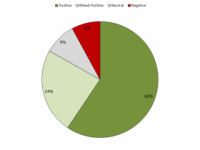
- 84% of studies from 2007-2013 reported mostly positive effects of meaningful use functionalities on outcomes (Figure 1).
- Strong evidence supports the use of clinical decision support (CDS) and computerized provider order entry (CPOE).
- Patient access, lists, and reminders had strong positive effects on outcomes; however, the number of studies on these functionalities is relatively small (Figure 2).
Figure 1: Updated Systematic Review of Effects of Meaningful Use Functionalities on Quality, Safety and Efficiency, By Study Outcome Result (% of Studies)
Health IT evaluation studies, 2007-2013 (n=493). Positive defined as health IT improved key aspects of care but none worse off; Mixed-positive defined as positive effects of health IT outweighed the negative effects; Neutral defined as health IT not associated with change in outcome; Negative defined as negative effects of health IT on outcome.
Citation: Jones SS, Rudin RS, Perry T, Shekelle PG. “Health Information Technology: An Updated Systematic Review with a Focus on Meaningful Use,” Ann Int Med 2014;160:48-54.

Figure 2: Select image for larger view
Figure 2: Updated Systematic Review of Effects of Meaningful Use Functionalities on Quality, Safety and Efficiency, By Study Outcome Result (% of Studies)
Health IT evaluation studies, 2007-2013 (n=493). Number of studies by meaningful use functionality in parentheses. Positive defined as health IT improved key aspects of care but none worse off; Mixed-positive defined as positive effects of health IT outweighed the negative effects; Neutral defined as health IT not associated with change in outcome; Negative defined as negative effects of health IT on outcome.
Citation: Jones SS, Rudin RS, Perry T, Shekelle PG. “Health Information Technology: An Updated Systematic Review with a Focus on Meaningful Use,” Ann Int Med 2014;160:48-54.
Health IT effects varied by type of outcome but were mostly positive overall.
- 78% of health IT studies reported at least some positive effects on safety outcomes.
- More than 75% of studies of health IT alerts and reminders reported positive effects on quality of care.
- 85% of the studies on utilization found that the …read more
Leave a Reply
You must be logged in to post a comment.