Category: Patient Engagement
-

Brochure: Infor Patient Engagement
Improve clinical outcomes, lower costs with patient engagement. Preventable hospital readmissions added $41.3 billion to hospital costs in 2011, according to an Agency for Healthcare Research and Quality statistical brief, while the World Economic Forum has found that chronic diseases accounted for high costs in healthcare, and are expected to hit $47 trillion globally over…
-
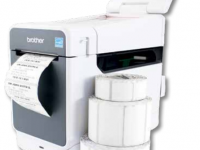
Reduce Specimen Misidentification Errors With Bar Code Point Of Care Labeling
According to the College of American Pathologists (CAP), approximately 169,000 adverse events occur in U.S. hospitals annually due to sample identification errors, with 55% of all specimen ID errors stemming from a primary specimen labeling error. Acknowledging this risk, one of the Joint Commission’s top National Patient Safety Goal’s standards is to “label containers used…
-

Personalizing The Patient Check-in Experience
By Noel Khirsukhani, EVP, Provider Sales and Marketing, PatientPoint® Like the rotary dial telephone, fax machine and two-way pager, the manual entry of patient data at the check-in desk is fading into history. Today, hospitals, physician groups and other providers are deploying innovative solutions that incorporate mobile kiosks and tablets with patient-friendly applications – a…
-

Bar Code Slide Labeling Helps Reduce Misidentification Errors In The Laboratory
According to the “2013 Deep Dive Analysis on Laboratory Testing” study conducted by the ECRI Institute, specimen mislabeling is the leading cause of errors in the laboratory testing process. This includes a specimen with a label from a different patient, two contradictory labels, or a label that does not correspond with the order. Of the…
-
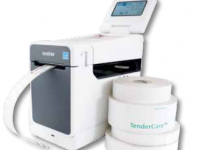
Positive Patient ID Is At The Core Of Patient Safety
The 2004 HealthGrades Patient Safety in American Hospitals Study states that preventable medical errors are responsible for as many as 195,000 deaths in the U.S. annually. Recognizing the role that positive patient identification plays in preventing medical errors, The Joint Commission has included “Improve the accuracy of patient identification” as one of its top National…
-

A Primer On ePrescribing Controlled Substances
In 2010 the U.S. Drug Enforcement Agency (DEA) finalized a rule allowing controlled substances – such as oxycodone, methadone, fentanyl, and morphine – to be prescribed electronically, which promises to address the efficiency and patient safety challenges associated with paper prescriptions for controlled substances. Specifically, electronic prescribing of controlled substances (EPCS) can improve the efficiency…
-

-

Learning About Health IT-Related Adverse Events from Patient Safety Organizations
Today ONC posted a final summary report on Health Information Technology Adverse Event Reporting: Analysis of Two Databases. Patient safety thrives in health care organizations where reporting of adverse events, including near misses and unsafe conditions, is encouraged. The Patient Safety and Quality Improvement Act of 2005 directed the Agency for Healthcare Research and…
-

Research Report: Accelerating Adoption of Monitoring, In Vitro Diagnostic Devices, Will Expand mHealth
The accelerating adoption of vital-signs monitoring and in vitro diagnostic devices will cause the mHealth market to grow eight-fold from $5.1 billion in 2013 to $41.8 billion in 2023, according to a new report from the Boston-based Lux Research Inc. The accelerating adoption of vital-signs monitoring and in vitro diagnostic (IVD) devices will help to…
-

Leaping into the Future: Innovation is Everywhere
At a time when the pressures to create change are more intense than ever, it is extremely gratifying to know that the pioneers in healthcare are stepping up to the plate and delivering. In that regard, it is once again our privilege and pleasure as the editors of Healthcare Informatics to be able to recognize…