
Making our nation’s health and wellness infrastructure interoperable is a top priority for the Administration, and government plays a vital role in advancing this effort. Federal agencies are purchasers, regulators, and users of health information technology (health IT), as they set policy and insure, pay for care, or provide direct patient care for millions of Americans. They also contribute toward protecting and promoting community health, fund health and human services, invest in infrastructure, as well as develop and implement policies and regulations to advance science and support research.
The Office of the National Coordinator for Health IT (ONC) has a responsibility to coordinate across the federal partners to achieve a shared set of priorities and approach to health IT. To that end, today we released the draft Federal Health IT Strategic Plan 2015-2020, and we are seeking feedback on the federal health IT strategy. This Strategic Plan represents the collective priorities of federal agencies for modernizing our health ecosystem; however, we need your input. We will accept public comment through February 6, 2015. Please offer your insights on how we can improve our strategy and ensure that it reflects our nation’s most important needs.
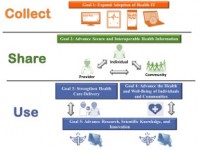
A collection of 35-plus federal departments and agencies collaborated to develop the draft Federal Health IT Strategic Plan: 2015-2020, identifying key federal health IT priorities for the next six years (Exhibit 1). The landscape has dramatically changed since the, the HITECH Act implementation was in its infancy . Since then, there has been remarkable growth in health IT adoption. Additionally, the Affordable Care Act implementation has begun to shift care delivery and reimbursement from fee-for-service to value-based care.
Select image for larger view
A central component of the prior Strategic Plan was increasing the adoption of certified EHR technology among hospitals and professionals eligible for Medicare and Medicaid EHR incentive payments, and encouraging its use in clinical care. While this effort is still incredibly important, our national agenda broadened to improving health, not only health care, through health IT beyond EHRs, as well as leveraging policy and programs beyond the EHR incentive program known as Meaningful Use. Our proposed federal strategy supports this agenda to engender a healthier nation through the collective impact of integral stakeholders, across multiple sectors, using a broader set of technologies.
Collection Of Health Information
Implementation of the HITECH Act accelerated adoption of certified EHR technology among hospitals and providers that were eligible for incentive payments from Medicare and Medicaid. However, health IT adoption across the care spectrum is far from ubiquitous. Adoption among ineligible providers continues to lag. Federal actions will support health IT adoption among these providers to improve care coordination across settings.
Federal actions will also focus on health IT broader than EHRs. Widespread telehealth use can increase care access and improve care quality. Remote monitoring can allow a care team to monitor an individual’s health …read more


